
[She]left the vivid air signed with [her] honor.
Of all the tributes to Dolly Parton, this one may be the oddest. Fans have poured in tributes far and wide, and the President has ordered the flags at half-mast. As if on cue Mother Nature produced her own tribute in tropical storm Dolly. There is even some talk of renaming the Nashville airport in her memory, a most apposite tribute to the woman whose music helped make it famous. Her hard-scrabble life is well known, growing up as she did in a one-room cabin in a family of 12 in Appalachia, near Locust Ridge, an area just outside of Sevierville, Tennessee. The family hardly had enough money for clothes; hence, later, her song chronicling her poverty in “Coat of Many Colors,” a coat made of a pastiche of quilted fabric. Despite her peers making fun of it, Dolly said it made her feel rich. She thrived in that ‘holler’ and never forgot what it taught her. Her rise to the heights of fame is a truth stranger than any fiction could write.
The reason this may be an odd tribute is that while Comus grew up in Tennessee, I did not grow up a fan of country music or of Dolly Parton. Of course there were plenty of chances. Country music played nonstop on various television and radio stations when I was a boy.
All of that did not overcome my father’s revulsion to the music. He thought it cacophonous, unnecessarily immoral (songs about drunks, women of dubious character, honk-tonks), and grammatically inferior. He thought it championed indolent intellectual practices, so, no, country music never entered our household. This might not seem so odd at first. We lived less than twenty minutes from the Ryman Auditorium, the very heart of country music, and his work took him past the Ryman every day. It wasn’t as if we didn’t know about it. And of course, it permeated just about everything in the media back fifty years ago. One such media blitz was the Porter Wagoner Show. I did watch it, including when that woman who became the Queen of Country Music entered stage right. Dolly replaced Norma Jean, and it was quite a risk that Wagoner took on the untested and unknown 21-year-old. The show reached millions of weekly viewers and probably did more to advertise country music than anything else.
Dolly dressed a bit more subdued than she later did, but her hair always looked like she was hiding one of those bearskin caps that the Foot Guards wear at Buckingham Palace. And of course, she also wore the makeup, pounds of it. But the heavily sequined jackets were saved for the host, Mr. Grand Ole Opry himself, Porter Wagoner. His rhinestone-studded “Nudie and Manuel” suits held sway in Country Music for the next five decades. Perhaps this was where Dolly learned about them. The two sang every Saturday night, and Porter always wore the most garish and outlandish clothes.
Dolly could not remain demure for long, however, and sure enough, she began to pull away. In 1974, after making all sorts of hits in duets with Porter (three times they won CMA Vocal Duo of the Year), she followed her dream of a solo career. I have a vague recollection that country music aficionados, including Porter, “just knew” she was going to fail going out on her own. I don’t remember the exact timing, but she skyrocketed to stardom not long thereafter. Porter continued, of course, but seemed more of a bright exhalation in the Country Music pantheon that fizzled out compared to Dolly. That is a bit overdone. Porter had 81 singles on the Billboard charts, won three Grammys, and ended up in the Country Music Hall of Fame. None of that mattered, and he sued Dolly for 3 million for leaving the show. Dolly, on the other hand, recorded “I’ll Always Love You,” in a tribute to Porter. That song, which Dolly held the rights to, earned her millions, especially after Whitney Houston sang it in the movie The Bodyguard.
The closest I ever got to country music stars was in the summer before my freshman year in college. I worked with Porter Wagoner’s son, Richard. I could have gone to meet all the country music stars but fell victim to my father’s biases. I really didn’t care for the music.
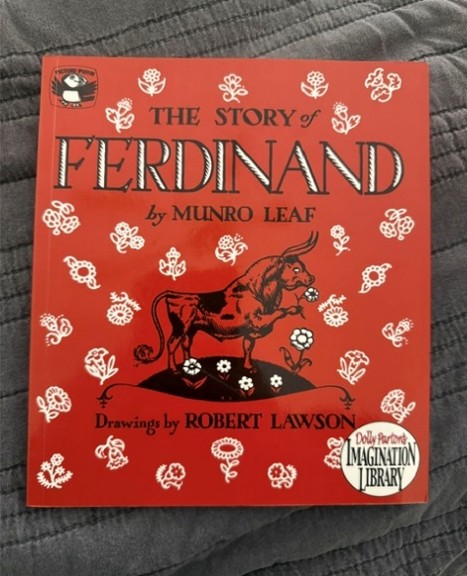
Dolly isn’t known for her music alone but also for her philanthropy. I’m not talking about the Bezos’s $100 million he awarded to Parton in his Courage and Civility Award, money earmarked for charitable giving. I am, however, speaking of the Imagination Library, money Parton set aside to provide books for children, literally all over the world. Begun in Sevier County, Tennessee, in the nineties, Imagination Library now operates in the US, Canada, the UK, Australia, and Ireland. Parton said she established it because her father, whom she said was one of the smartest men she ever knew, was hindered by his inability to read. The library has improved literacy in some of the most illiterate areas, especially in the South. The funds provide one book a month, up to 60 books per child to the age of five. These are age-appropriate books, and more than 700,000 have been delivered to Palmetto children since 2010. While the funds really pay for the administration of the project, private funds cover the books and delivery. A friend of mine has a granddaughter who received books from the Library and even set aside a special shelf upon which each year’s books were placed. Her favorite was The Story of
Ferdinand by Munro Leaf, as seen here.
Amid all the hagiography about Dolly, not everything she did turned to gold, or was happily accepted by everyone. Her movie The Best Little Whorehouse in Texas, not exactly a family-friendly film, furrowed the brows of some fans. The movie, with Burt Reynolds (you may recall him, or a part of him), celebrated the Chicken Ranch, a well-known brothel in Texas, and its eventual demise. Dolly wore a revealing bustier throughout the movie, a movie that pitted public morality against private enterprise.
She embraced the LGBTQ+ agenda, same-sex marriage, and trangenderism. Her song, “Travelin’ Thru,” was written for the movie Transamerica, a film about a transgender woman. It would be wrong to think of her as a progressive activist, but rather as a quiet supporter. While remaining mostly apolitical, this rag-to-[super]riches success story was as much a capitalist as anything.
Many will miss her, of course, and even those of us who never listened to her music.