
In the specialized toxicology laboratories that police the boundary between life and death in South Carolina, the standard panels were returning a baffling result: nothing.
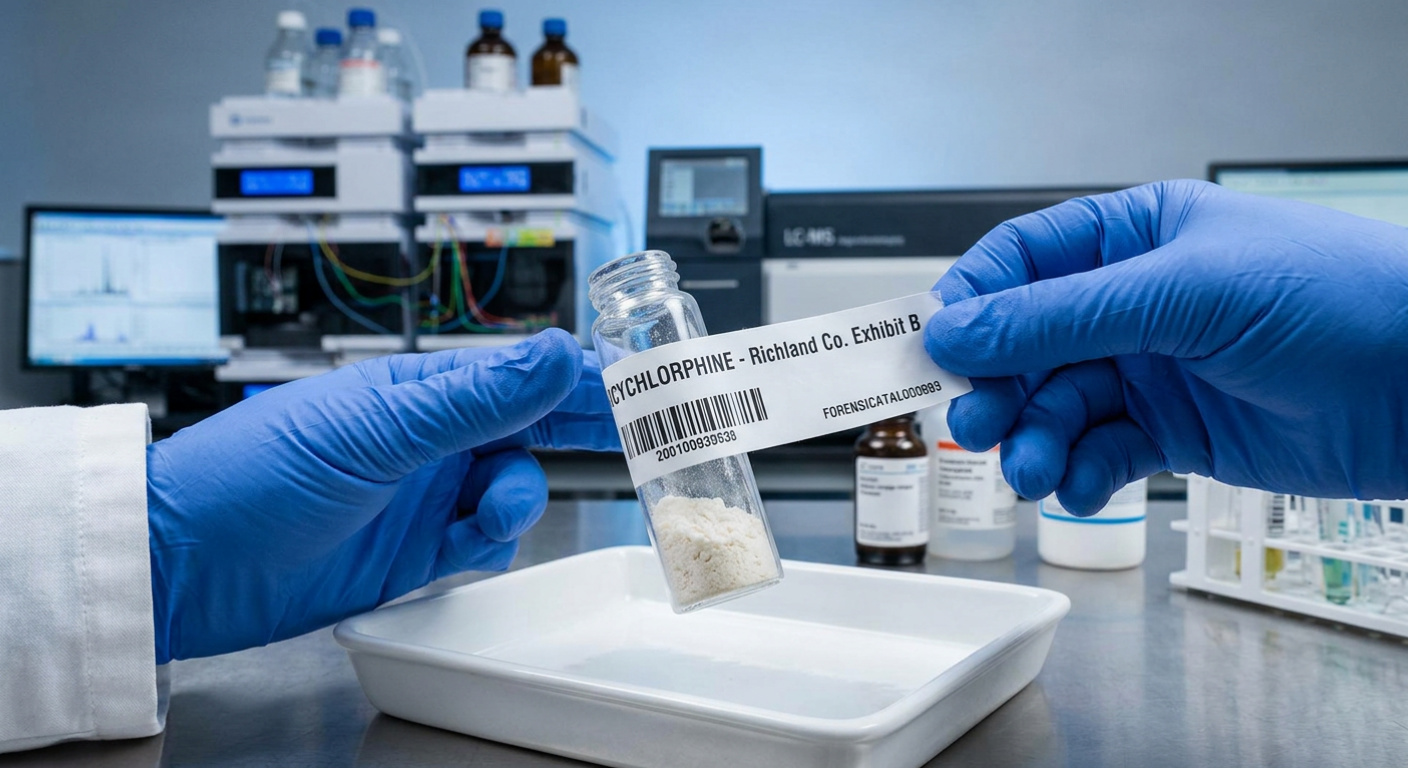
When a woman died in Richland County earlier this year, initial toxicology screenings showed no traces of traditional narcotics. It was only through advanced mass spectrometry that forensic investigators uncovered the culprit — a novel chemical compound known as cychlorphine.
The detection marked the official arrival in South Carolina of one of the most potent synthetic opioids ever engineered, igniting immediate alarms from the capital to university campuses across the state.
What Is Cychlorphine? The Invisible Poison
Cychlorphine (also designated as N-propionitrile chlorphine) belongs to the “orphine” class of synthetic designer opioids, structurally distinct from standard illicit fentanyl.
Engineered for extreme potency, cychlorphine is estimated by public health authorities and lab researchers to be up to 10 to 40 times more potent than fentanyl — and hundreds of times stronger than clinical morphine.
Chemical Formula : C₂₃H₂₅ClN₄O
Drug Class       : Orphine synthetic opioid
Potency Profile  : ~10x-40x fentanyl potency
Screening Threat : Invisible to standard rapid urine & toxicology tests
The drug poses a dual threat to public health:
-
Extreme Potency: Microscopic doses — an amount no larger than a few grains of salt — are sufficient to trigger fatal respiratory paralysis.
-
Testing Evasion: Because cychlorphine lacks the chemical structure of standard opioids or fentanyl analogues, standard immunoassay drug screens and hospital rapid panels fail to detect it. Confirmation requires specialized liquid chromatography-mass spectrometry (LC-MS).
-
Adulteration: Cychlorphine is rarely sold under its own name; instead, illicit cartels mix it into street powders, fake prescription pills (counterfeit Percocet or Xanax), or lace it into other illicit substances.
Symptoms & Overdose Treatment: The Narcan Protocol
Cychlorphine binds aggressively to opioid receptors in the central nervous system, quickly depressing the body’s autonomous drive to breathe.
Key Symptoms of Exposure and Overdose
-
Early Effects: Rapid sedation, severe dizziness, extreme drowsiness, and pinpoint pupils.
-
Critical Overdose Signs: Shallow, slow, or completely stopped respiration; blue, purple, or pale lips and fingertips; unresponsiveness; limp limbs; and distinct gurgling or choking sounds.
Emergency Intervention
Because of cychlorphine’s binding affinity and extreme potency, reversing an overdose requires immediate action and often multiple doses of naloxone (Narcan).
Emergency Overdose Protocol:
Call 911 immediately: State clearly that an opioid overdose is suspected.
Administer Naloxone (Narcan): Spray one unit into a nostril. If there is no response within 2 to 3 minutes, administer a second dose. Cychlorphine overdoses frequently demand three or more doses to restore breathing.
Perform Rescue Breathing: Maintain air flow until emergency medical services arrive.
Positioning: If the individual is unconscious or vomiting, turn them onto their side (recovery position) to prevent asphyxiation.
A Spreading Casualty List: Regional and National Fatalities
The discovery in Richland County sent shockwaves through state law enforcement.
“When we saw Cychlorphine and they called us, we were just in shock,” Richland County Coroner Naida Rutherford said following the initial death investigation. “Expect that pills if they’re not from a prescribed source, not from a pharmacy … expect that they are counterfeit.”
                       CYCHLORPHINE CASUALTY TRACKING

  NATIONAL / REGIONAL                            SOUTH CAROLINA
  ┌───────────────────────────────┐              ┌───────────────────────────────┐
  │ Tennessee: 41+ Fatalities     │              │ Richland County: Confirmed    │
  │ Louisiana: Multi-case Cluster │ ───────────► │ Fatal Overdose Discovery      │
  │ Ohio & Oklahoma: Confirmed    │              │ SC Colleges: Active Public    │
  │ Overdoses & Seizures          │              │ Safety Warnings Issued        │
  └───────────────────────────────┘              └───────────────────────────────┘
While South Carolina officials have managed to isolate early localized cases, the regional trends painting the broader picture are alarming:
-
Tennessee & the Mid-South: Health officials in Tennessee confirmed more than 41 fatal overdoses directly linked to cychlorphine within a condensed timeframe.
-
Midwest & Gulf Coast: Clusters of fatal poisonings and non-fatal hospitalizations have been recorded across Louisiana, Ohio, and Oklahoma.
-
South Carolina: State and county officials continue expanding toxicology protocols to monitor whether unexplained deaths from recent months were caused by un-queried cychlorphine exposure.
State & Higher Education Response: “This Is Poison, Plain and Simple”
South Carolina officials have launched a coordinated public health and law enforcement offensive. Attorney General Alan Wilson issued an urgent public safety warning targeting synthetic supply chains and warning families of the chemical’s stealthy nature.
“This is poison, plain and simple,” Attorney General Alan Wilson stated. “We are seeing foreign adversaries and drug cartels working together to flood our communities with these deadly substances .. . Parents need to understand how serious this is and talk to their kids now, because one mistake, one exposure, can be fatal.”
Because cychlorphine has heavily impacted young adults via contaminated counterfeit pills, colleges and universities have been much more proactive in issuing direct warnings:
-
Michigan State University (MSU): Health officials issued direct warnings to students and staff regarding cychlorphine’s extreme potency and its ability to bypass standard drug testing panels.
-
University of Texas at Austin & Student Channels: Campus safety groups, peer networks, and student media accounts (such as Barstool Longhorn and Longhorn Chicks) amplified digital warnings regarding cychlorphine to educate students on the necessity of carrying Narcan.
-
University of Mississippi & SEC Campuses: Following localized student safety investigations, student bodies and regional public health networks circulated alerts regarding emerging synthetic analogs found in the illicit drug supply.
Campus Safety Protocols and Public Universities
While university administrators confirm that no cychlorphine overdoses have been reported on campus grounds at major institutions, public universities across the state are ramping up preventative measures and harm-reduction access.
┌─────────────────────────────────────────────────────────────────────────────┐
│                       SOUTH CAROLINA CAMPUS HARM REDUCTION                  │
├───────────────────────────────┬─────────────────────────────────────────────┤
│ Institution                   │ Safety & Harm Reduction Response            │
├───────────────────────────────┼─────────────────────────────────────────────┤
│ University of South Carolina  │ • Naloxone (Narcan) at Student Health       │
│                               │ • Gamecock Recovery Program support         │
├───────────────────────────────┼─────────────────────────────────────────────┤
│ Clemson University            │ • Wall-mounted Emergency Narcan kits        │
│                               │ • Student awareness & safety outreach       │
├───────────────────────────────┼─────────────────────────────────────────────┤
│ College of Charleston         │ • 24/7 Naloxone access outside Public Safety│
│                               │ • Collegiate Recovery Program support       │
└───────────────────────────────┴─────────────────────────────────────────────┘
University spokespersons are urging students to remain vigilant regarding illicit prescription pills and unverified substances:
“We are aware of the highly potent synthetic opioid that’s mixed with other drugs,” said Philip Sikes, a spokesperson for Clemson University. “So we just want to make sure students are diligent and know the signs of opioid overdose and poisoning, so if they do suspect that’s occurred, they need to call 911.”
The University of South Carolina has similarly made naloxone accessible through its Student Health Center while promoting peer support through its Gamecock Recovery program. State health agencies note that while broader overdose numbers in South Carolina had dropped roughly 30 percent in recent annual reports, the emergence of cychlorphine threatens to disrupt those gains if unaddressed.
Public health officials emphasize that anyone struggling with substance use disorder — or seeking emergency supplies of naloxone — should reach out to local healthcare providers or the South Carolina Department of Public Health for confidential aid.
Where to Turn for Guidance, Testing and Support
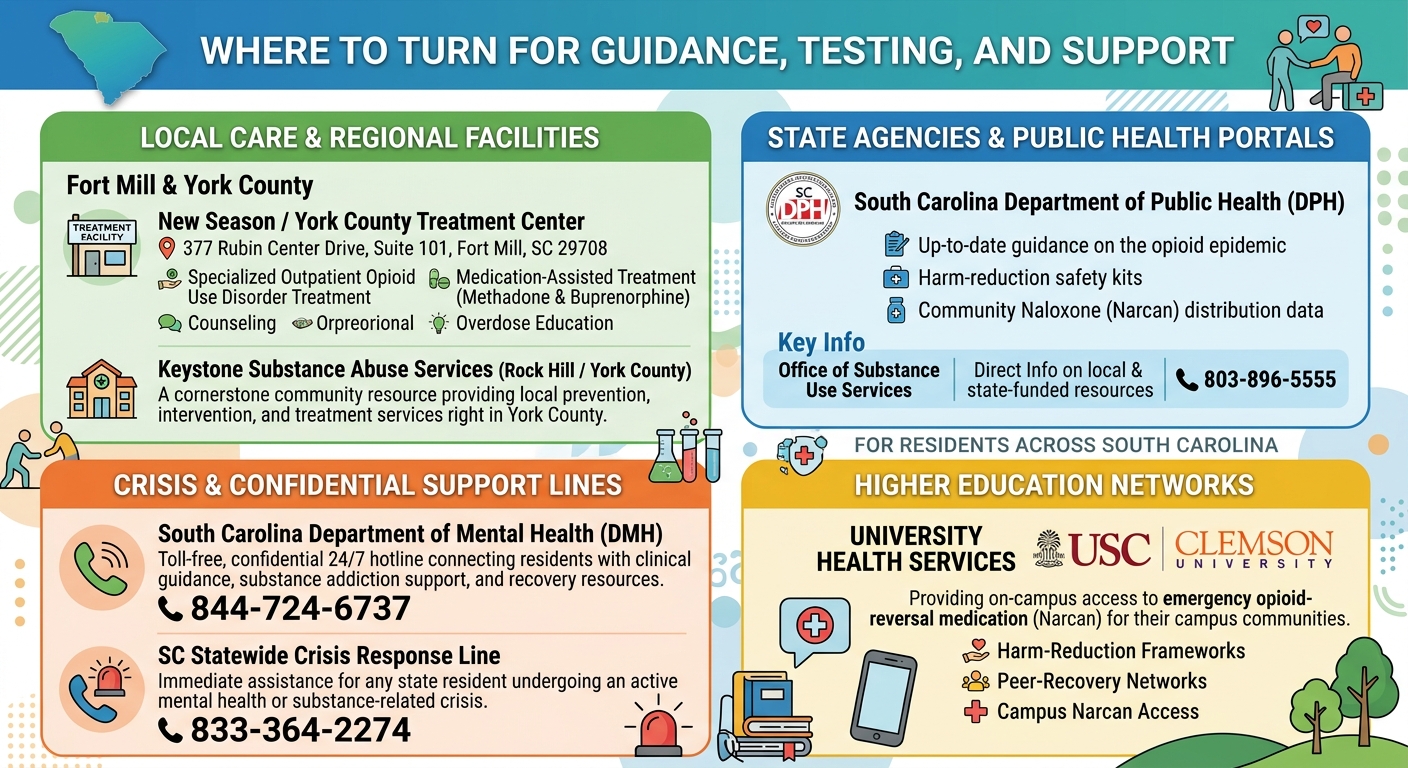
For residents across South Carolina — including families in Fort Mill, Tega Cay, and the surrounding York County region — seeking education, preventative health resources, or addiction treatment support, several key official networks and local facilities are available:
Local Care & Regional Facilities (Fort Mill & York County)
-
New Season / York County Treatment Center
-
Location: 377 Rubin Center Drive, Suite 101, Fort Mill, SC 29708
-
Services: Provides specialized outpatient opioid use disorder treatment, medication-assisted treatment (MAT) (including methadone and buprenorphine), counseling, and overdose education.
-
-
Keystone Substance Abuse Services (Rock Hill / York County)
-
A cornerstone community resource providing local prevention, intervention, and treatment services right in York County.
-
South Carolina State Agencies & Public Health Portals
-
South Carolina Department of Public Health (DPH)
-
Website/Resources: Offers up-to-date guidance on the opioid epidemic, harm-reduction safety kits, and community naloxone (Narcan) distribution data.
-
Office of Substance Use Services: Reachable at 803-896-5555 for direct information regarding localized public treatment options and state-funded resources.
-
-
South Carolina Department of Mental Health (DMH) Support Line
-
Phone: 844-724-6737
-
Services: A toll-free, confidential 24/7 hotline connecting residents with clinical guidance, substance addiction support, and recovery resources.
-
-
SC Statewide Crisis Response Line
-
Phone: 833-364-2274
-
Services: Immediate assistance for any state resident undergoing an active mental health or substance-related crisis.
-
Higher Education Networks
-
University of South Carolina & Clemson University Student Health Services
-
Both institutions maintain active harm-reduction frameworks, peer-recovery networks, and on-campus access to emergency opioid-reversal medication (Narcan) for their campus communities.
-