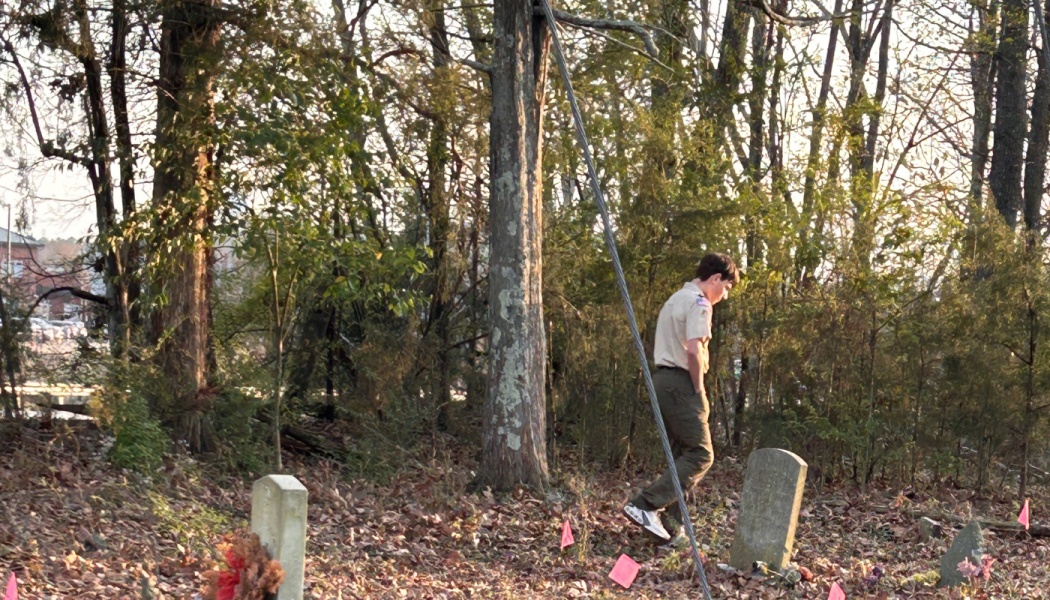

A Tega Cay Scout is turning his Eagle Scout project into an act of civic stewardship, launching a campaign to clean, restore, and beautify the Joseph Thomas Family Cemetery, a historic burial ground that has stood at the corner of Route 160 and Gold Hill Road for more than 150 years.
Kaleb Keskey, who is working toward the rank of Eagle Scout, chose the cemetery as the focus of his project after recognizing that the site had fallen into disrepair despite its deep historical significance to the community. “When I saw how unmaintained the cemetery was, it made me sad,” said Kaleb.
A Cemetery with Deep Roots
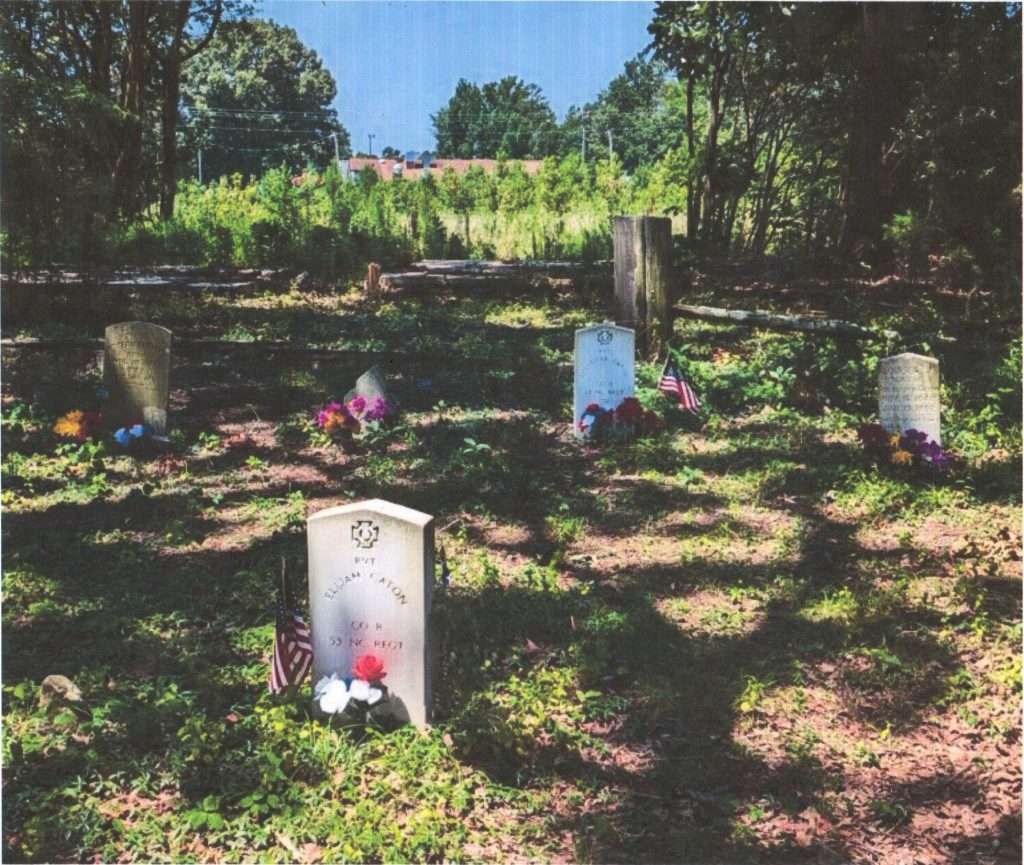
The Joseph Thomas Family Cemetery holds the graves of some of Tega Cay’s earliest residents. Among those buried there is Joseph Thomas himself, born in 1822 in Davidson County, North Carolina, who died May 14, 1897, and whose family farmed land stretching from the present intersection of Route 160 and Gold Hill Road into North Carolina. The site also holds memorial headstones honoring brothers Sylvester Canton and Elijah Canton, who both served in the 53rd North Carolina Infantry Regiment during the Civil War. Sylvester died of typhoid pneumonia in Richmond, Virginia, in 1864, while Elijah died as a prisoner of war in Elmira, New York, in February 1865.
In all, the cemetery contains approximately eight or nine headstones but 18 graves, including those of family members and at least one child who died in 1855. Confederate flags mark the memorials for the Canton brothers, and several of the surviving headstones still bear legible inscriptions despite more than a century of southern heat and rainfall.
Years of Neglect
The cemetery sits along one of Tega Cay’s busiest corridors, yet most residents drive past it without noticing. Over the years, weeds, fallen debris, and aging shrubs have made portions of the grounds nearly invisible during summer months. A wooden fence once enclosed the property has deteriorated. No formal arrangement has been in place to maintain the site. “Long term care is time consuming and costs money,” added Kaleb. “That’s why I took time to find low- to – no maintenance products in my clean-up.”
Jim MacBride, a longtime Tega Cay resident who researched the cemetery for the Tega Cay History website, described the scene in a recent account. “The weeds grow wild, the old shade trees sag with time, and the once sturdy wooden fence falls to the ground,” MacBride wrote. “When summer comes and the weeds grow, the smaller gravesites disappear.”
What the Project Will Do
Keskey’s project will address those conditions directly. Volunteers plan to clear fallen debris, remove garbage, and take out old shrubs that have overtaken the grounds this fall when the conditions are more favorable to new plants. New no-mow/maintenance grass seed and deer resistant, low-maintenance SouthEast region (native) wildflower seed will be planted to give the site a more welcoming appearance without requiring ongoing upkeep. The project will also install a historic marker or plaque to help educate passersby about the people buried there.
Funds raised will cover grass and flower seed, trash removal, supplies, and the cost of the historic plaque.
How to Help
Community members who want to support the project can make a donation at freefunder.com/campaign/kalebs-eagle-project. Keskey and his team are accepting contributions now as they prepare to begin the work this fall.
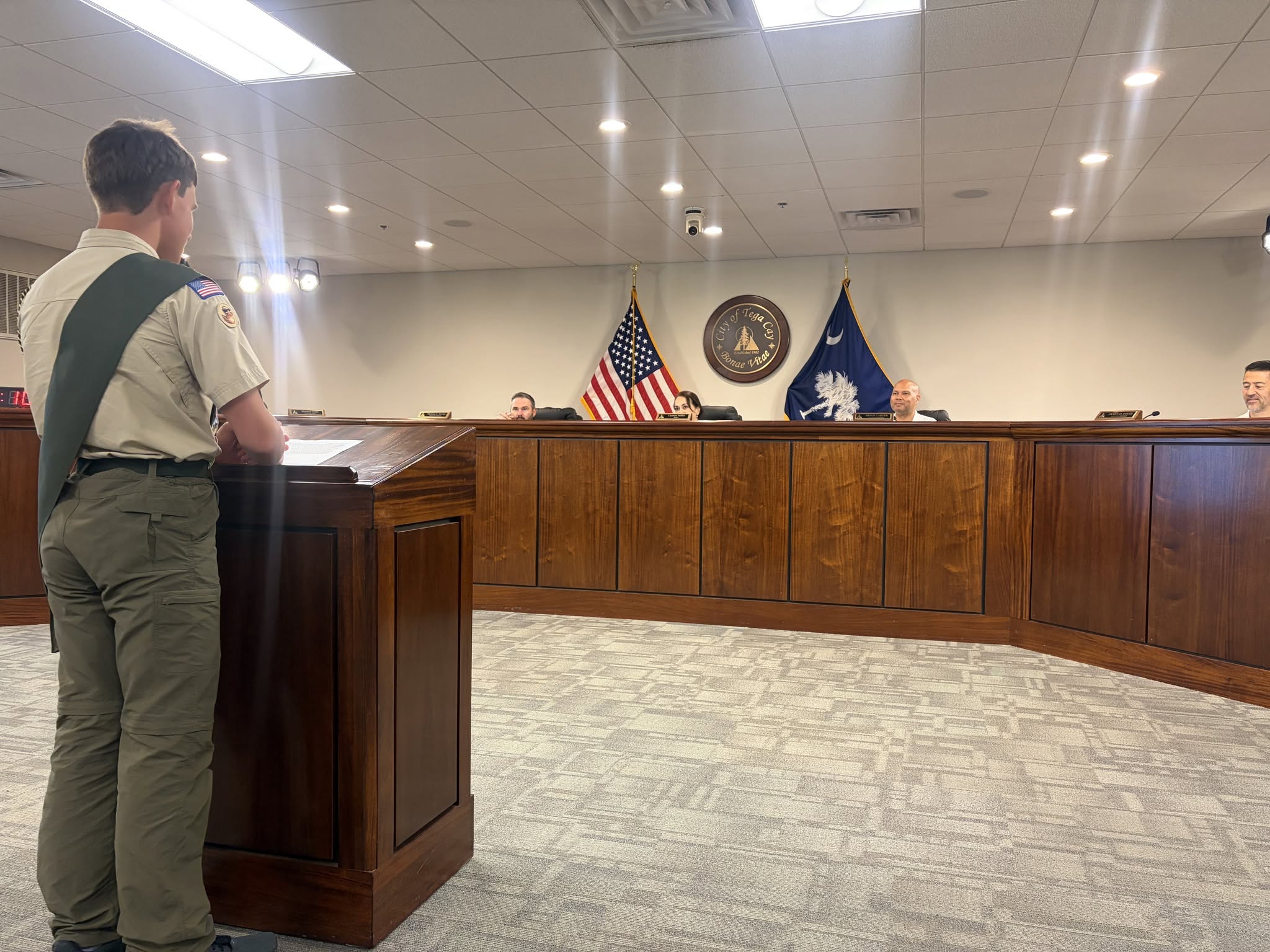
The Eagle Scout rank is the highest achievement in Scouting America. Earning it requires candidates to plan, develop, and lead a service project that benefits their community. “Becoming an Eagle Scout shows the dedication and hard work required from a scout and how important community service is,” said Kaleb. “I want to be an Eagle Scout because I want to follow in my dad’s steps and I love community service. It is important to me to finish the scouting ranks so that I can focus more on community service and helping my cub scout den members become boy scouts too.”
Kaleb appreciates all of the support from Mr. Joe Harris, Mr. Funderburk, Mayor Miller, City Council and everyone who’s already donated, he will formally thank them at the end of the project and will donate any unused funds to the Fort Mill Historic Society.


Sign up here to receive the Tega Cay Sun "day" Spectator every Sunday morning with all the news from the week directly to your inbox
Thomas Hyslip lives in Tega Cay with his wife and daughter. After 27 years in the U.S. Army and Federal Law Enforcement, he retired to pursue his passion for teaching. Tom is now an Associate Professor of Instruction at the University of South Florida. In 2 short years he has won 10 awards from the South Carolina Press Association, including first place in column writing, education beat reporting and best podcast.