
If you live long enough, you’ll not only see everything but be troubled by most of it. Our age cannot be counted on to remain the same for very long. But that is, by and large, a good thing. Too much sameness will dull our senses for the curious and odd. Yet, there is in one sense that while everything changes, permanent things remain the same. The old French proverb—plus ça change, plus c’est même chose– captures that first and well. In the end, the world returns to its sacred standards. If it did not, we’d all be baffled by the constant evolution of change.
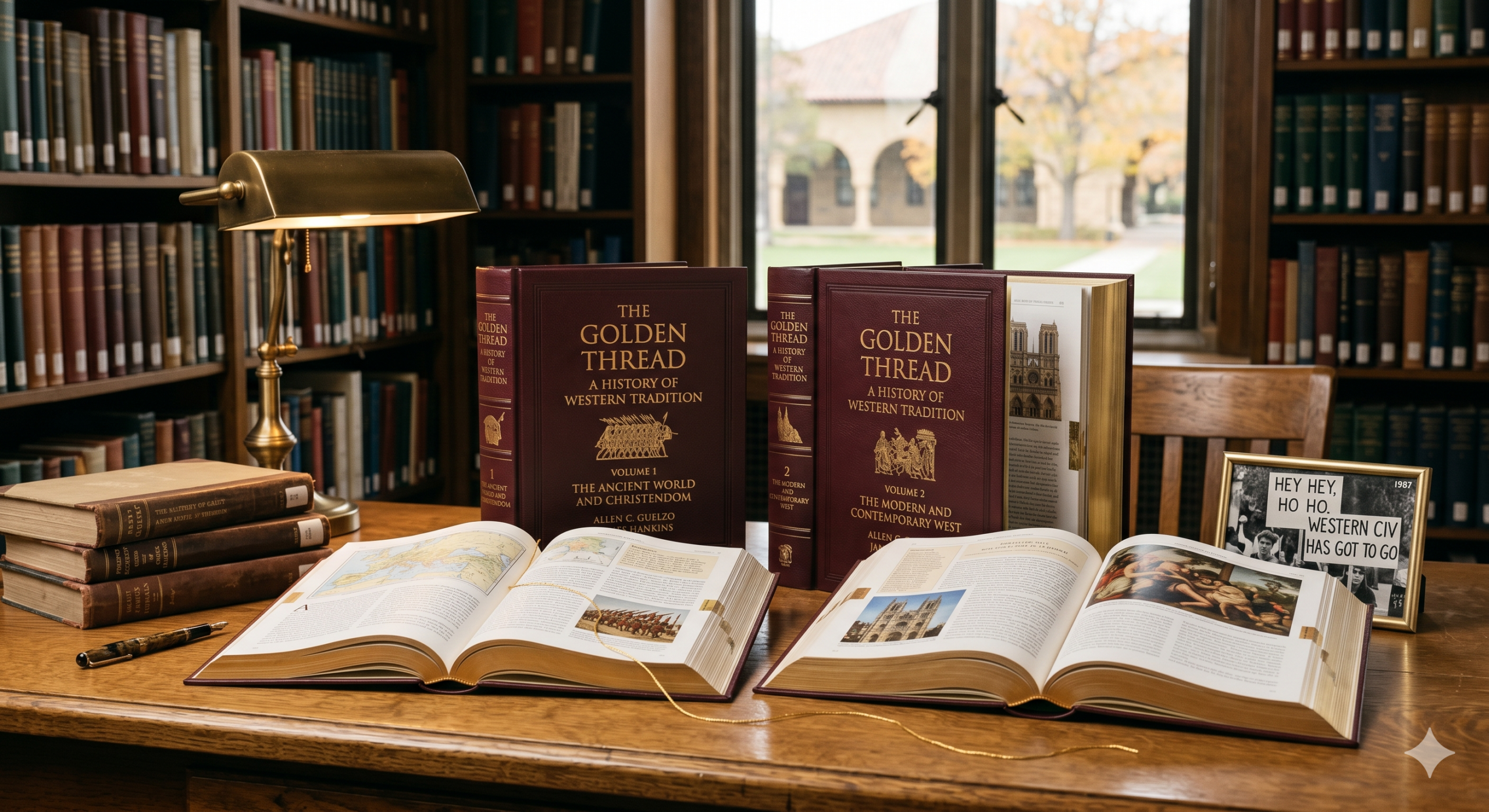
Take, for example, the case of that well-known chant by the late Jessie Jackson. In 1987, while at Stanford University, Jessie, with his minions in tow, led them in what became the dawning of DEI. Stanford had too much Western culture, according to Jackson, and so the chant that became famous began: “Hey, Hey, ho, ho, Western Civ has got to go.” The rhyming made it easy for those Stanford students to remember, plus it got the point across in less than a dozen words.
Whether Jackson really meant to end courses in Western culture is moot. That is exactly what happened. Granted, there was not much taught outside of Western Civ, but Western culture—hence its name—but, as it later turned out, there was not much outside of Black Literature other than Black authors when it was taught, and rightly so. To be generous, one must come to the conclusion that there was a call to expand beyond Western Culture, not replace it with every other culture. You don’t make a wrong right by creating another wrong one.
Unfortunately, that is not what happened. Subsequent histories of Western culture went from hagiography in favor of it and its accomplishments, to philippics against both. Veritable donation memoriae histories became standard for anything that had to do with Western Culture, or anything that bore the fingerprints of white people. Now, while there is much to condemn white people for, they are not the only culprits in history. Every race has its villains. Caucasians were too many in number, and so their preponderance became proverbial for Evil, with that capital E. Over the next several decades, historians made their mark by “decentering” Western history and calling out those who accepted the “lazy” version of civilization. They forgot that, as the prodigious and prolific historian W. E. H. Lecky once wrote, you cannot condemn a past culture with the mores of a present one.
They also forgot, as a wise pundit once remarked, that the reason Papua New Guinea doesn’t have a Shakespeare is not owing to white people ignoring or conspiring to omit their culture. Rather, it is because Papua New Guinea never produced one. You cannot create a bard out of thin air, although many have tried.
When you tie Western Culture to Christianity, hysteria reigns supreme. Again, Christian Culture has much to be regretful over and many sins to confess. But it is not without merit, and soft-pedaling its accomplishments along with those of Western Culture in general is perilous and wrong-headed.
Enter a new history to help return us from ‘wild and whirling words’ to a more sane view of all cultures, regardless of race, color, or creed. Allen C. Guelza and James Hankins have combined their geniuses to create The Golden Thread: A History of Western Tradition: The Ancient World and Christendom. Few books deserve to be called tomes, but this one, in pagination and weight, fulfils that word to every letter. Covering more than 1300 pages and weighing in at nearly seven pounds, this quarto-sized book is gloriously illustrated and lucidly written (you may want to consider a truss if you plan to carry it about). Guelza and Hankins, in a lively and entertaining style, recreate history from its earliest times to the dawning of the age of Christendom. In ten chapters, Hankins especially details everything from the battle of Marathon to Lycurgus’s Constitution, to the schools of philosophy, the early kings of the Republic, the Roman Empire, to Constantine, Jewish and Christian Antiquity, the fall of the Empire and its missteps, the Middle Ages, Europe’s birth, and what amounts to early European culture and civilization.
Even a long review cannot do this glorious book justice. Maps, what the authors refer to as ‘Threads,” and biographies of the well-known and the not-so-well-known, round out the best history since Will and Ariel Durant’s Story of Civilization (11volumes). The “threads” appear on nearly every page and are inserts that expand on a particular part of the history being covered in the chapter. DO NOT skip over these, as they represent some of the most fascinating reading. This volume is without some of the biases evident in the Durant’s retelling, or even Gibbon’s Decline and Fall, for that matter. They do not forsake other cultures in favor of Western Culture, but they do not browbeat Western Culture, downplay it, or disparage it. It’s a refreshing take after decades of hateful books hating Western culture.
If you plan to read through The Golden Thread, give yourself plenty of time. Volume two, also out now, The Golden Thread: A History of Western Tradition: The Modern and Contemporary West (Guelzo takes center stage in this one), is nearly 900 pages and filled with the same precision and execution as volume one.
Those homeschooling children, and those preparing to take Advanced Placement or International Baccalaureate exams in history, should take hold of these volumes, for they will vouchsafe passing either of those exams. Any history, philosophy, or survey teachers will find this volume endlessly helpful in refreshing known facts with illustrative examples. It’s too much to hope that universities would adopt these volumes as textbooks, mainly because universities were (and to a considerable extent, still are) the prime movers in excoriating Western Culture. But they should do so without hesitation. Alas, hope does spring eternal.
Yes, these are monstrously large volumes to take on. But the return on your investment of time will never cease, not only as you read through them, but as you return to them again and again to refresh or inform your education.