
By Gina Ginther, Gardening on the Cay
“A native plant is one that occurs naturally in a particular region, ecosystem, or habitat without direct or indirect human intervention…” (The United States National Arboretum)
It is fascinating to think that plants were finding their place and thriving on our planet in an orderly, scientific progression long before humans ever walked where they were growing. As one explores natives, it is fascinating to discover their history, not only from a botanical standpoint, but also from the standpoint of early discovery and use by both indigenous people and new settlers.
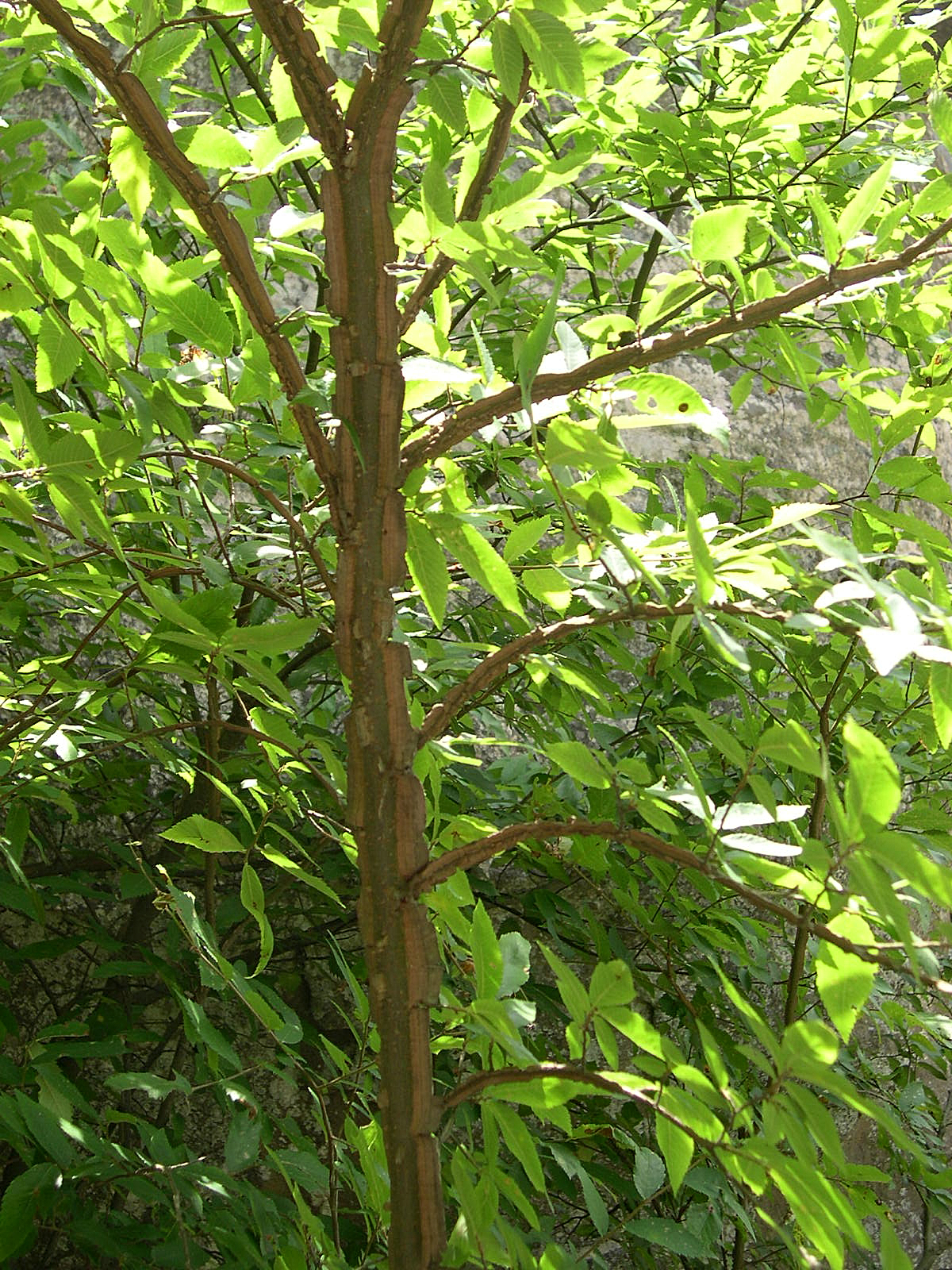
Merriam-Webster defines “winged elm” as an elm (Ulmus alata) of the U.S. having twigs with prominent corky projections. The first known use of the description winged elm to describe the tree was in 1820. In the 18th and 19th centuries, the fibrous inner bark was made into rope for fastening of cotton bales and for making baskets. It was given the name Wahoo by the Creek Indians. The Indians also seeped the inner bark for medicinal use for gastrointestinal issues and to ease childbirth. Mature elms have hard, difficult to split wood. This toughness made it ideal for use during the age when farm implements, wagon wheel hubs and even auto chasses contained a fair amount of wood. Today, commercial uses for winged elm include flooring, boxes, crates and furniture. The wood is flexible and thus particularly useful for chair rockers. Again, due to its resistance to splitting, the winged elm is also used for hockey sticks.
The winged elm is a deciduous tree native to the southern woodlands of the United States. The most characteristic feature of this elm is the pair of opposite corky outgrowths produced on twigs and small limbs. These corky wings may be as much as one-half inch wide. The name “alata” or “alatus” in botanical names, always refers to some type of wing. The winged elm is USDA Native Status is L48(N). The tree is found in native habitat in both wet and dry areas, and in rocky ridges, making it a very adaptable tree for urban planting. Winged elm can grow 30-60 feet high, with a width of 20-40 feet. The bark is red-brown to ashy gray with flat topped ridges that are separated by irregular fissures. It has an erect crown with an oval form with stray branches protruding. The leaves are alternate with a doubly toothed margin and unequal base. In the fall the leaves turn golden yellow. Insignificant small, brownish green flowers appear in clusters in late winter to early spring before the foliage emerges. It is a host plant for the Question Mark and Red Spotted butterflies. The seeds are eaten by songbirds and small mammals.
Winged elm tree information suggests that the trees are not difficult to grow and require little care in the USDA plant hardiness zones 6 through 9. The winged elm is the least shade tolerant of the North American elms, but you can plant it in either full sun or partial shade. It adapts to almost any type of soil and has a high drought tolerance. Winged elm tree care includes pruning, early and often, to eliminate multiple trunks and narrow-crotched branches. Your goal is to produce one central trunk with lateral branches spaced along the trunk.
How about a winged elm bonsai? Apparently, this species grows attractively well as a miniature!
TASKS
Aeration and over seeding
Final pruning and clean-up of beds
Enjoy your incoming garden catalogs!
Prepare for frost! Take inventory and decide on what to winterize.
Have plant “blankets” and other freeze protection on the ready
Plant bulbs, trees and shrubs
Leaf management! Remember to “leave the leaves” where they are beneficial!


Sign up here to receive the Tega Cay Sun "day" Spectator every Sunday morning with all the news from the week directly to your inbox
Thomas Hyslip lives in Tega Cay with his wife and daughter. After 27 years in the U.S. Army and Federal Law Enforcement, he retired to pursue his passion for teaching. Tom is now an Associate Professor of Instruction at the University of South Florida. In 2 short years he has won 10 awards from the South Carolina Press Association, including first place in column writing, education beat reporting and best podcast.