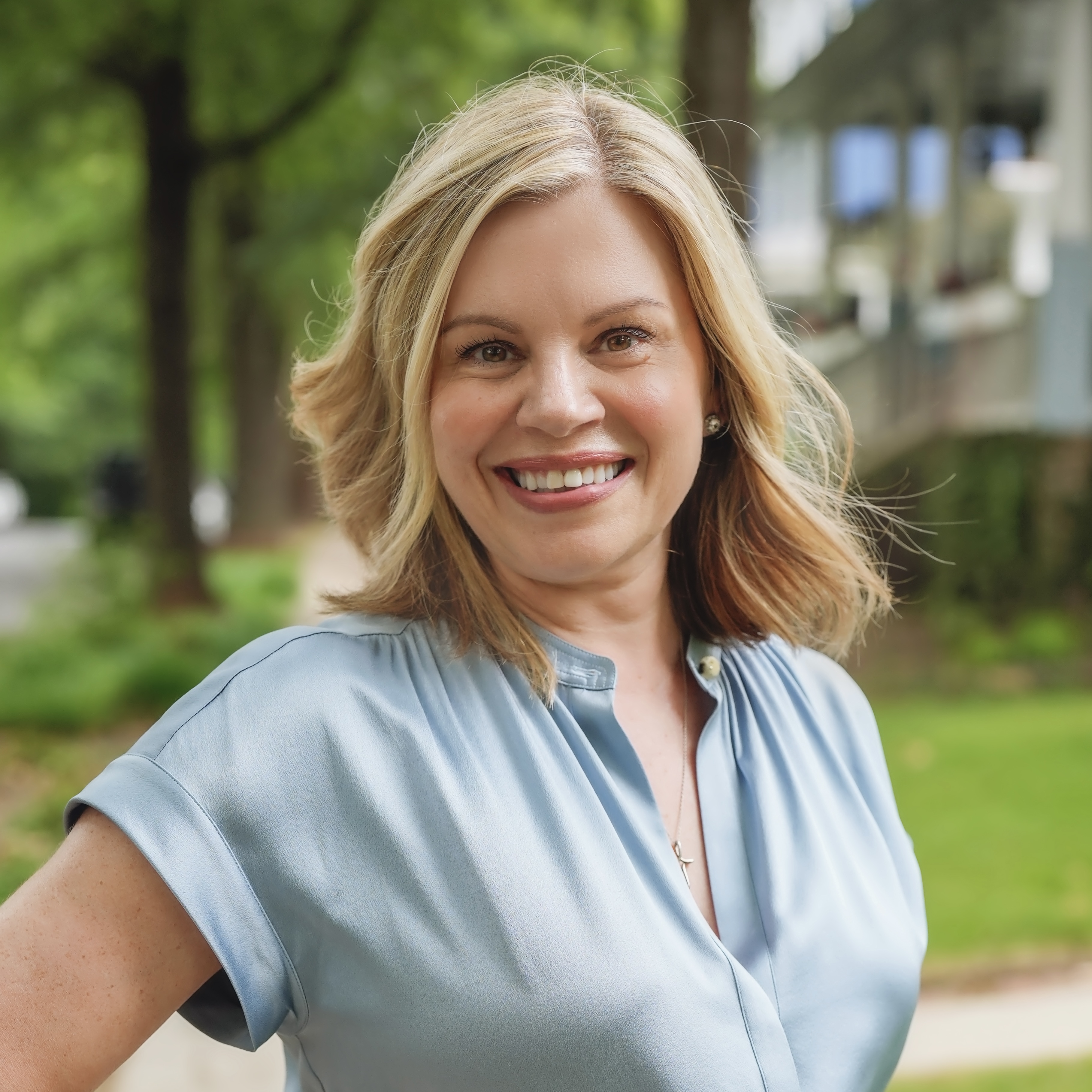

The following is an editorial received from Fort Mill School Board candidate Larry Barnett. No changes were made prior to being made available to the public.
The controversy surrounding Silfab Solar and the Flint Hill schools raises serious questions about decisions made by York County and the Fort Mill School District. How did we reach a point where a solar manufacturing facility and public schools are located next to each other, and what should be done now to protect our children and community?
How We Got Here
The property on which the Flint Hill schools and Silfab are located was zoned Light Industrial (LI) in 1992. At that time, schools were a permitted use under the LI classification.
In 2017, Fort Mill School District purchased its first 40 acres in the area with plans to build a school. In 2019, the district was not aware of Silfab’s proposed development, but proceeded based on the adjacent property being a distribution warehouse. The district subsequently acquired additional 88 acres, bringing the school campus to approximately 128 acres, while commercial development proceeded on the neighboring property under the existing LI zoning. At that point, the principal concern associated with the neighboring development appears to have been traffic. Schools were permitted under the existing zoning, and the adjacent property was expected to serve a commercial distribution use.
In March 2022, York County revised its LI zoning regulations to remove schools as a permitted use. The school district could have reconsidered its plans at that point, but instead applied to rezone its property to allow the schools to proceed.
In December 2022, Silfab issued a list of chemicals that would be used. During that same period, a York County zoning technician issued a letter stating that Silfab’s proposed facility was “principally permitted” under the LI classification. Construction of the schools and development of the Silfab facility subsequently proceeded.
In 2023 Silfab submitted applications to the DES (DHEC) for air permits and DES held a public hearing. On March 1, 2024, DES issued an air permit. The permit required emergency response planning, employee training, monitoring and future inspections. Obviously hazardous materials are involved. After the Fee-in-Lieu-of-Taxes (FILOT) for Silfab was introduced in March of 2023, residents and the school district became aware of the hazardous chemicals being used, and began asking questions. On September 18, 2023, York County approved the FILOT for Silfab.
It is important to remember why FILOTs are frequently used:
In 2006 SC passed a law that eliminated the tax or residential homes that was used to support school operating expenses with a plan to replace it with an increase on sales tax and tax on businesses. At the same time, SC has one of the highest business tax rates in the Southeast. So while we need businesses to pay taxes to operate schools, the business tax schedule discourages businesses from moving to the state. These are conflicting programs. As a result, counties and school districts are constantly looking for incentives to attract business and create jobs, with FILOT being a common tool used. I believe this is one of the main reasons this project proceeded without adequate consideration to the safety issues involved.
An approval for “parking lot and utility modification” was issued (without public knowledge at the time), and forwarded to DHEC for their approval on April 24, 2024. Upon return from DHEC, a permit for the parking lot and utility modification was issued by a member of the York County Planning and Development Department. This approval was issued while the zoning of the site was under appeal (appeal accepted March 13, 2024 and BZA hearing set for May 09, 2024). The permit from this approval ultimately issued May 13, 2024 (4 days after the BZA ruling). Attempts to revoke the permit potentially opened the county to legal lawsuits by Silfab.
On May 9, 2024, the York County Board of Zoning Appeals voted unanimously, 5–0, that solar-panel manufacturing was not a permitted use under the LI zoning classification. The board’s written decision followed on May 30, 2024. On June 25, 2024, York County issued a statement that the BZA decision did not apply to Silfab. Anticipating spending hundreds of thousands of dollars on prosecuting lawsuits, and at least that much additionally in taxes for York County to defend lawsuits, citizens make an offer (to Ralph Norman) to move Silfab to an appropriately zoned location using tax dollars rather than pay for inevitable lawsuits. The offer to negotiate was refused, and lawsuits followed. In addition York County citizens continued to put pressure on Council.
York County stated in May 2025 that Council lacked the authority to revoke the permits or issue a cease-and-desist order. This is contradicted by York County Zoning Code Ordinance, which states the following:
- 155.1239 REVOCATION OF PERMIT OR APPROVAL.
(A) Basis for Revocation. A permit or approval may be revoked by the Zoning Administrator at any time prior to the completion of the use, building, structure, development, site improvement, or subdivision for which the permit was issued, when the Zoning Administrator determines that one or more of the following conditions is present:
(1) There is departure from the plans, specifications, or conditions as required under the terms of the permit;
(2) That the permit was procured by materially incorrect information;
(3) That the permit was issued in error; or
(4) That any of the provisions of this Chapter are being violated.
The authority for County Council to revoke permits was also confirmed by a letter from the Attorney General’s Office to Representative Jackie Terribile dated July 14, 2025.
In March 2026 there were two incidents when leaks occurred and DES began enforcement activities.
On July 21, 2026, Circuit Court Judge William McKinnon upheld the zoning board’s decision. Nevertheless, the dispute over how that ruling affects Silfab’s existing approvals and operations has continued. The legal status of the facility remains contested. The county and Silfab have recently initiated additional litigation seeking a judicial determination of how the zoning board’s ruling affects Silfab’s existing approvals and operations. The main issue is whether the Zoning Board of Appeals (ZBA) decision can be applied retroactively as based on claims it occurred after the zoning approval was issued. On October 16, 2026, Silfab and York County filed separate lawsuits seeking clarification on this issue. Presumably, if the court rules that the ZBA decision can be applied retroactively, the county will be able to rescind the construction and operating permits without excessive liability exposure.
In an emergency meeting on October 23, 2026, the Fort Mill School Board voted to request that the district be allowed to join the litigation process – finally taking proactive action on behalf of citizens and students.
The Safety Concerns
Despite these events, the Flint Hill schools are operating next to the Silfab facility. The possibility that chemical-intensive manufacturing could take place at this location raises serious questions about the safety of students, school employees, and nearby residents.
Those concerns are not merely hypothetical. On March 3, 2026, an estimated 300 gallons of water containing potassium hydroxide were released at the Silfab facility. On March 5, a leak involving hydrofluoric acid was reported. Flint Hill Elementary was closed as a precaution on March 5, and the district closed the school for two days during the incidents. These events prompted renewed calls for stronger safety measures and greater accountability.
Silfab, the county, and the state have taken steps to investigate the incidents and address safety concerns. However, the public still needs clear answers about the causes of these incidents, the safeguards required before chemical manufacturing begins, and the measures that would protect students if another release occurred.
As an engineer with substantial experience working with pollution-abatement systems, I understand that such systems can reduce emissions and manage hazards. I also know that their efficiency varies and that equipment can malfunction or fail. Monitoring and emergency procedures are important safeguards, but they cannot guarantee that an accidental release will never occur.
Questions the School Board Must Answer
The Fort Mill School Board voted 6–1 to continue operating the schools and has budgeted hundreds of thousands of dollars for an independent environmental engineering firm to monitor conditions at the Flint Hill campus. The monitoring is intended to provide warnings if hazardous conditions are detected so that appropriate protective actions, including evacuation, can be taken.
I have two major concerns about this approach.
- Can the schools be evacuated quickly enough to protect students?
The schools are approximately 1,200 feet from the Silfab facility. If a hazardous release occurs, how quickly would monitoring systems detect it? How quickly would school officials receive a warning? How long would it take to evacuate classrooms and transport students to a safe location?
These questions require independent technical analysis and realistic emergency drills. An evacuation plan is only effective if it can protect students under the conditions it is designed to address.
- Why should the school district pay to monitor the operations of a neighboring industrial facility?
If monitoring is necessary because of the risks associated with Silfab’s operations, why should local taxpayers and the school district bear that expense? The company operating the facility, or the appropriate governmental agencies responsible for regulating it, should be held accountable for the costs of necessary safety monitoring to the extent permitted by law.
School funding should be directed toward educating children, not subsidizing the oversight of an industrial operation next door.
Accountability for Decisions
The school district had opportunities to reconsider its plans after questions about Silfab emerged. It could also have joined concerned residents in pursuing legal action to challenge the proposed manufacturing operations. Instead, the district proceeded with construction and has committed substantial public funds to monitoring and emergency preparedness.
York County likewise had opportunities to address the zoning questions and the compatibility of the proposed industrial use with nearby schools. Instead, county officials issued approvals that have since become the subject of extensive legal disputes.
In hindsight, these decisions deserve serious scrutiny. Public officials should explain what they knew, when they knew it, what alternatives they considered, and why they believed proceeding was in the best interests of the public.
Our elected officials should be listening to the citizens they represent and making public safety a central consideration in their decisions.
My Position If Elected to the School Board
- Limit Silfab’s operations to those permitted under the applicable zoning classification.
If solar-panel assembly can be conducted without the chemical-intensive manufacturing processes that have raised these concerns, then the county should determine whether assembly-only operations are consistent with the LI classification and enforce the applicable restrictions.
If Silfab cannot operate within the legally permitted limits of the LI classification, the county should pursue lawful options to require the facility to relocate to an appropriately zoned industrial area. The southern part of York County, near I-77, has been identified as an area intended for heavy industrial development.
I recognize that the precise level of risk associated with Silfab’s proposed operations must be evaluated using sound engineering and environmental analysis. However, no monitoring system or industrial process can provide an absolute guarantee against accidents. We should not accept avoidable risks to children when safer, legally viable alternatives may exist.
- Stop making the school district responsible for monitoring Silfab’s operations.
The district should not have to divert hundreds of thousands of dollars from educational priorities to monitor a neighboring industrial facility. The district should instead work with concerned residents, environmental experts, and appropriate regulatory agencies to pursue lawful measures that limit Silfab to permitted operations or, if necessary, seek relocation.
If independent monitoring remains necessary, the district should pursue arrangements requiring Silfab or the appropriate responsible agencies to fund it, consistent with applicable law.
- Require York County Council to be accountable to the public.
York County Council was elected to represent the interests of its residents. Economic development and job creation are important, but they must be weighed against public health, safety, and the long-term interests of the community.
Residents deserve transparent explanations of the county’s decisions, the legal advice on which those decisions were based, and the alternatives available to protect the community.
Larry Barnett
Candidate for Fort Mill School Board


Sign up here to receive the Tega Cay Sun "day" Spectator every Sunday morning with all the news from the week directly to your inbox
Thomas Hyslip lives in Tega Cay with his wife and daughter. After 27 years in the U.S. Army and Federal Law Enforcement, he retired to pursue his passion for teaching. Tom is now an Associate Professor of Instruction at the University of South Florida. In 2 short years he has won 10 awards from the South Carolina Press Association, including first place in column writing, education beat reporting and best podcast.