
The following is an editorial received from Fort Mill School Board candidate Larry Barnett. No changes were made prior to being made available to the public.
By Larry Barnett, Candidate for Fort Mill School Board
I believe Fort Mill can keep its schools excellent, support its teachers, and still demand greater financial discipline from the people entrusted with taxpayer money. Those two goals are not in conflict. In fact, I think they depend on each other.
Every spending decision our district makes should come with a clear explanation. What is the need? What alternatives were considered? And what exactly is the financial commitment being made on behalf of the people who will be paying for it, often for decades?
That standard has to apply to how we present major borrowing decisions to this community, not just how we spend day to day.
On March 19, 2024, voters approved a referendum authorizing up to $204 million in school bonds. The election was entirely valid. But look at the turnout. According to official results, 3,808 people participated, just 6.71 percent of registered voters. The measure passed 2,438 to 1,370.
Compare that to November 2024, when our school board race appeared on the same ballot as state and federal elections, the kind of general election that reliably brings people to the polls. District records show roughly 46,459 ballots cast that day, more than twelve times the participation of that March referendum. Those November voters were not voting on the bond itself, since it had already passed in March. But the comparison says something important. When school board decisions ride alongside the elections people already show up for, far more of our neighbors have a voice. When they are held on their own in March, only a small fraction of the community ends up deciding for everyone else.
A $204 million commitment is one of the most consequential financial decisions this district can make. I believe it deserves the attention of a true general election ballot, not a standalone March vote with turnout in the single digits. Scheduling future bond referendums alongside our state and federal general elections would put these decisions in front of far more of our neighbors, and it may reduce the cost of running a separate election altogether, though a precise savings figure would require a look at the actual election expense records.
Participation is only half of the equation. The other half is whether residents actually understand what they are voting on.
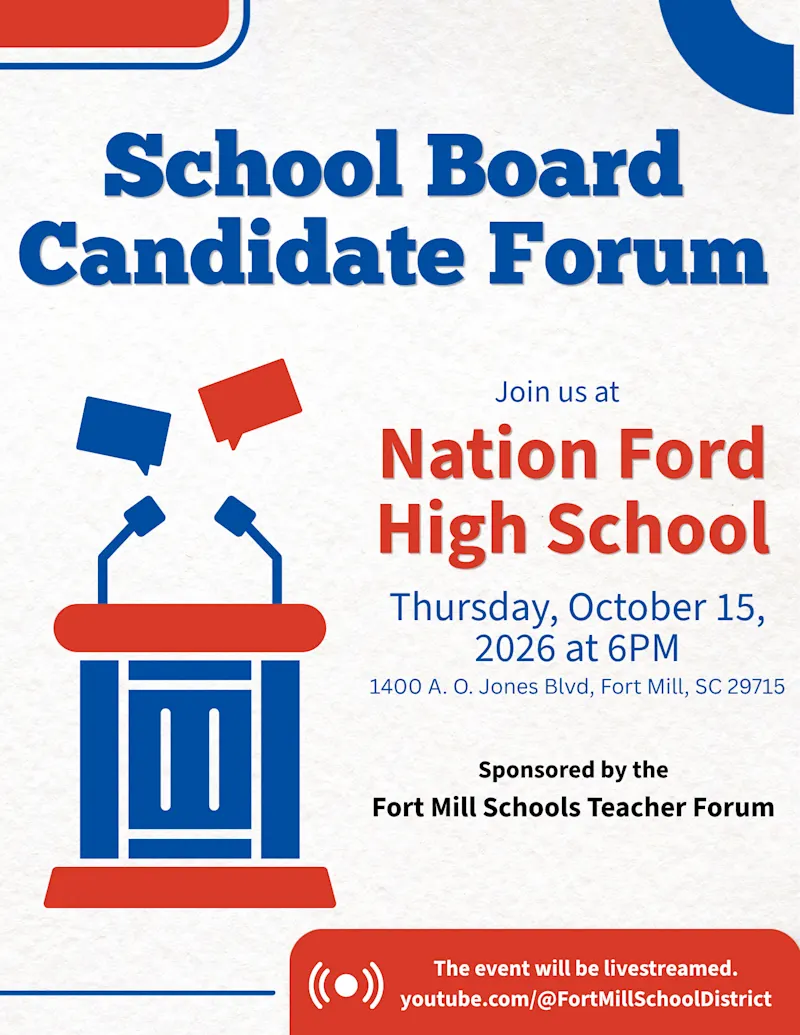
At a recent candidate forum, when the subject of this referendum came up, board candidate Keith Griffin pushed back on the idea that more needs to be done, saying, “The problem you have there is the individual’s not doing their job as a community member.”
I see it differently. Yes, every resident bears some responsibility to stay informed. But a school board member’s job is not finished once a document gets posted to a website. Our job is to make that information clear, and to bring it directly to the people we represent, not wait for them to come find it. Members of the school board are elected to represent the people and have a fiduciary responsibility to the people who pay the taxes.
Families should be able to understand, in plain language, what a bond would fund, how it will be repaid, what the interest will ultimately cost, and what new operating expenses the resulting facilities will create. Nobody should have to sit through a lengthy financial presentation just to understand what they are being asked to approve.
But clear information only helps if it is accurate. And on the most important number behind the 2024 bond, enrollment, the projections missed by a wide margin.
The district said the referendum was needed to address continued student population growth. Its presentation projected enrollment would reach 21,248 students in the 2025-26 school year. The district now reports 18,229 students for that year, 3,019 fewer than projected. Its own published figures show enrollment grew by just 24 students between 2022-23 and 2025-26.
I also believe we owe this community a careful look at how our budget grows. Enrollment alone does not explain rising costs. The district points to compensation, benefits, student services, the expiration of federal grants, and the cost of operating new facilities as real drivers of that growth. Those explanations deserve real consideration. But they also deserve real questions. Are we spending efficiently? Are our staffing levels right? Is what we are building today affordable for the families who will be paying for it for the next twenty years?
None of this is about undermining our teachers or our classrooms. I support them fully, and I always will. This is about applying the same discipline to a half-billion-dollar institution that any responsible business or family would apply to their own finances. Strong academic results do not excuse the board from reviewing financial decisions closely. If anything, they are the reason we owe it to our kids to get this right.
As an engineer and a former business owner, I spent my career planning ahead, weighing alternatives, and understanding the full cost of a decision before committing to it. That is the discipline I want to bring to this board.
Fort Mill’s schools are one of the biggest reasons families choose to live here. My goal is simple: protect that strength, and make sure this community stays a place families can actually afford to call home.
Larry Barnett
[email protected]
803-412-8553