
By MEG KINNARD and JEFFREY COLLINS Associated Press; THOMAS HYSLIP, Tega Cay Sun
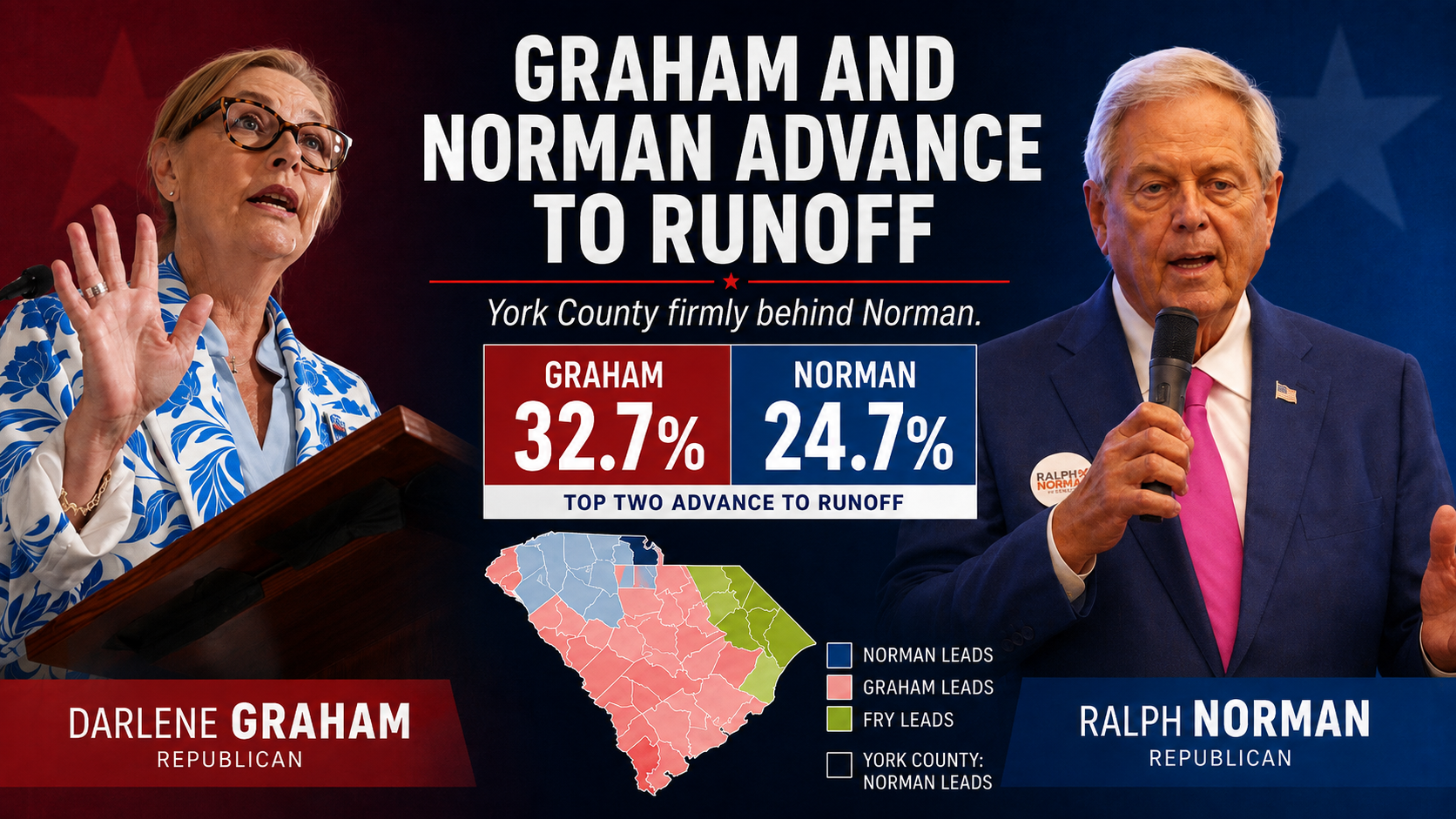
Sen. Darline Graham and U.S. Rep. Ralph Norman advanced Tuesday to an Aug. 25 runoff in South Carolina’s Republican special primary for the U.S. Senate, sending the race to fill the seat of the late Lindsey Graham into two more weeks of campaigning.
Graham led the field of 10 with 109,604 votes, or 32.7 percent, according to unofficial results from the South Carolina Election Commission. Norman, the Rock Hill Republican who has represented York and Lancaster counties in Congress since 2017, finished second with 82,529 votes, or 24.6 percent. Neither reached the majority needed to win outright.
Locally, the two split the territory Norman represents. York County went heavily for Norman, who took 8,792 votes there, or 48.9 percent of the 17,971 ballots cast. It was his strongest county in the state. Lancaster County went to Graham, who won 2,657 votes, or 37.3 percent, to Norman’s 2,350, or 33 percent.
Turnout was low almost everywhere. Statewide, 334,880 people voted out of 3,019,175 registered, a rate of 11.1 percent. York County came in below that at 10.3 percent and Lancaster County at 11 percent.
A campaign compressed by a sudden death
Lindsey Graham died July 11 at his Washington home after suffering a tear in his aorta. State law set a compressed timeline that pushed candidates into the race before funeral observances in Washington and South Carolina had finished, according to The Associated Press.
Gov. Henry McMaster had appointed Darline Graham to serve the waning months of her late brother’s term. She picked up President Donald Trump’s swift backing, but the rare open Senate seat attracted a broad field, including some of the state’s top Republicans, setting up the latest test of the president’s command over the GOP base.
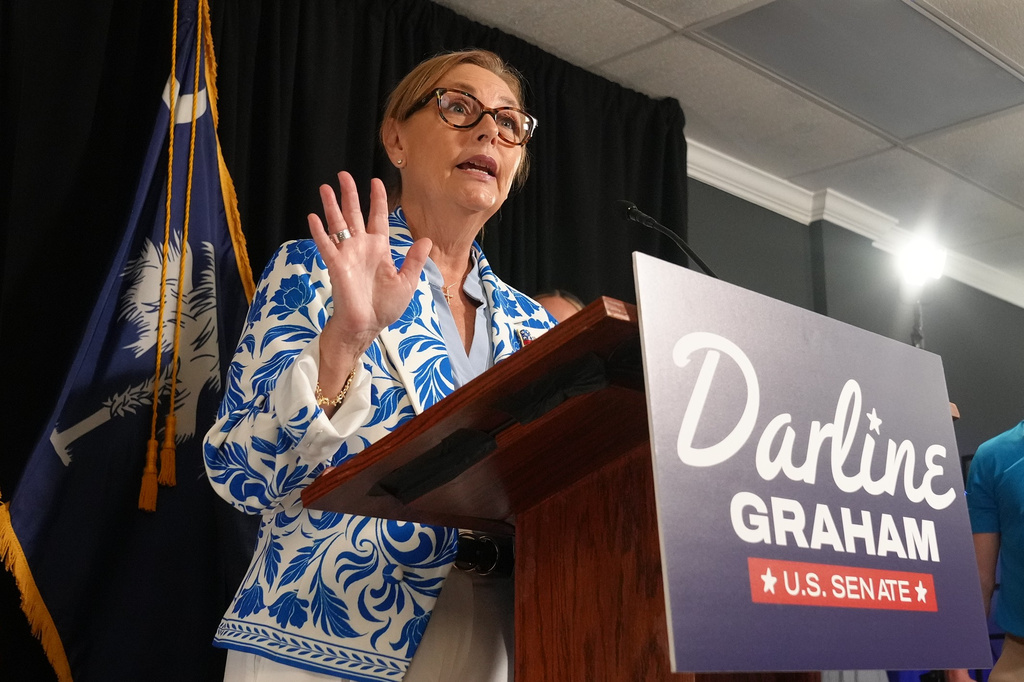
Darline Graham addressed reporters Tuesday evening flanked by her family and introduced herself anew to the state’s Republicans voters. She boasted of her work with Trump in her first three weeks in the Senate and took a veiled swipe at her opponent, saying she was “guilty as charged” of not being a politician.
“I will spend the next two weeks of this runoff meeting with voters and unlike some politicians listening to their concerns — yes, listening to their concerns,” Graham said, not mentioning Norman by name. “This seat belongs to the people of South Carolina and I will work hard to earn, earn your vote.”
Trump told reporters Tuesday evening that Graham called him after making the runoff to thank him for his support. Trump responded “I think so” when asked if he would campaign for her, but noted he also liked Norman and other candidates in the race, saying, “I mean, they’re all Trumpers.”
Some voters said the late senator’s standing shaped their vote. Frank Bohn of Horry County told the AP that Graham was not a politician but was related to one of the finest senators the state ever had.
Where Norman found his votes
Norman has been a member of the House Freedom Caucus, the most conservative bloc in the chamber, and is known across the state as a fiscal conservative. He entered the Senate race after an unsuccessful run for the Republican nomination for governor earlier this year and picked up endorsements from Sens. Rick Scott of Florida and Mike Lee of Utah. He has broken with Trump at times, including when he backed former Gov. Nikki Haley in the 2024 presidential primary.
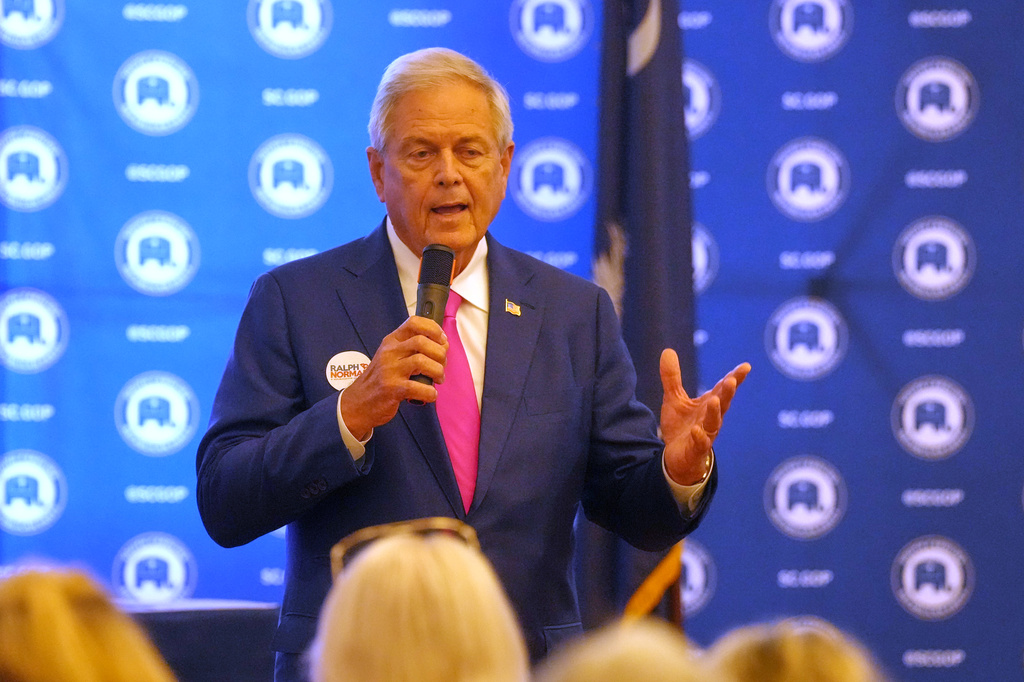
“Let’s win this thing in a big way,” Norman told supporters Tuesday night, appealing for party unity and noting that no one expected the seat to come open.
The county returns show he reached the runoff on Upstate strength rather than on his own district. Norman’s 5th Congressional District takes in all of Cherokee, Chester, Fairfield, Kershaw, Lancaster, Lee, Union and York counties along with parts of Spartanburg and Sumter counties, according to his congressional office.
Those eight whole counties cast 39,455 ballots Tuesday and gave Norman 16,103 votes. That is 40.8 percent of the vote inside his district but only about a fifth of his statewide total. He carried four of the eight, winning York, Chester, Cherokee and Union while losing Lancaster, Kershaw, Fairfield and Lee to Graham.
Greenville County, entirely outside the district, gave Norman 17,358 votes on its own, more than all eight of his whole home counties combined. Spartanburg County, which is split between two districts, added 8,493. Anderson County gave him 5,806 and Pickens County 3,836.
Norman carried 10 of the state’s 46 counties, nine of them in the Upstate plus Chester. Graham carried 28 and U.S. Rep. Russell Fry carried eight in the Pee Dee and along the coast.
The rest of the field
Fry finished third statewide with 65,730 votes, or 19.6 percent. The Myrtle Beach area congressman had at one point appeared likely to receive Trump’s endorsement after Lindsey Graham’s death and ran without it, working to build name recognition outside his district. He took 1,725 votes in York County and 1,067 in Lancaster County. Voter George Mitford told the AP he chose Fry over Darline Graham because he thought Fry had more relevant experience.
Former Gov. Mark Sanford finished fourth with 50,013 votes, or 14.9 percent, falling short in his latest attempt to return to office after a 2009 extramarital affair derailed his career. His Senate bid came three months after he abandoned a run for his former U.S. House seat, saying at the time that he intended to start a nonprofit focused on the national debt. He drew 1,294 votes in York County and 570 in Lancaster County.
Greenville businessman Mark Lynch took 19,858 votes, or 5.9 percent. He had challenged Lindsey Graham in last month’s regular Republican primary and restarted his campaign after the senator’s death. Lynch ran as a Trump supporter, though Trump wrote on social media in June that Lynch was a lunatic and a disaster for the party.
Duke Buckner, Danny Ford II, Mark McBride, Glenda Gail Parker and Samuel “Sam” Shepherd each finished below 1 percent statewide.
The November matchup
The runoff winner will face Democrat Annie Andrews, a Charleston physician who won her party’s June primary outright. Andrews built her campaign around challenging Lindsey Graham and has had to rework it into a broader case against the Republican field.
No Democrat has won a U.S. Senate seat in South Carolina in decades. When Lindsey Graham last ran in 2020, he beat Democrat Jaime Harrison by 10 percentage points.
County election offices in York and Lancaster counties will post early voting locations and hours ahead of the Aug. 25 runoff, and voters can confirm their registration and polling place at scvotes.gov.
Source attribution: Unofficial county and statewide results and turnout figures from the South Carolina Election Commission detail report for the Aug. 11, 2026 special primary.
The Associated Press contributed to this report.
Meg Kinnard can be reached at http://x.com/MegKinnardAP


Sign up here to receive the Tega Cay Sun "day" Spectator every Sunday morning with all the news from the week directly to your inbox
Thomas Hyslip lives in Tega Cay with his wife and daughter. After 27 years in the U.S. Army and Federal Law Enforcement, he retired to pursue his passion for teaching. Tom is now an Associate Professor of Instruction at the University of South Florida. In 2 short years he has won 10 awards from the South Carolina Press Association, including first place in column writing, education beat reporting and best podcast.